
Can a Wall-Mounted Scratcher Save Floor Space?
A traditional scratching post can occupy an awkward corner and move across the floor whenever the cat uses it. A vertical scratching panel uses the wall instead—but installation matters, particularly when the home is rented.
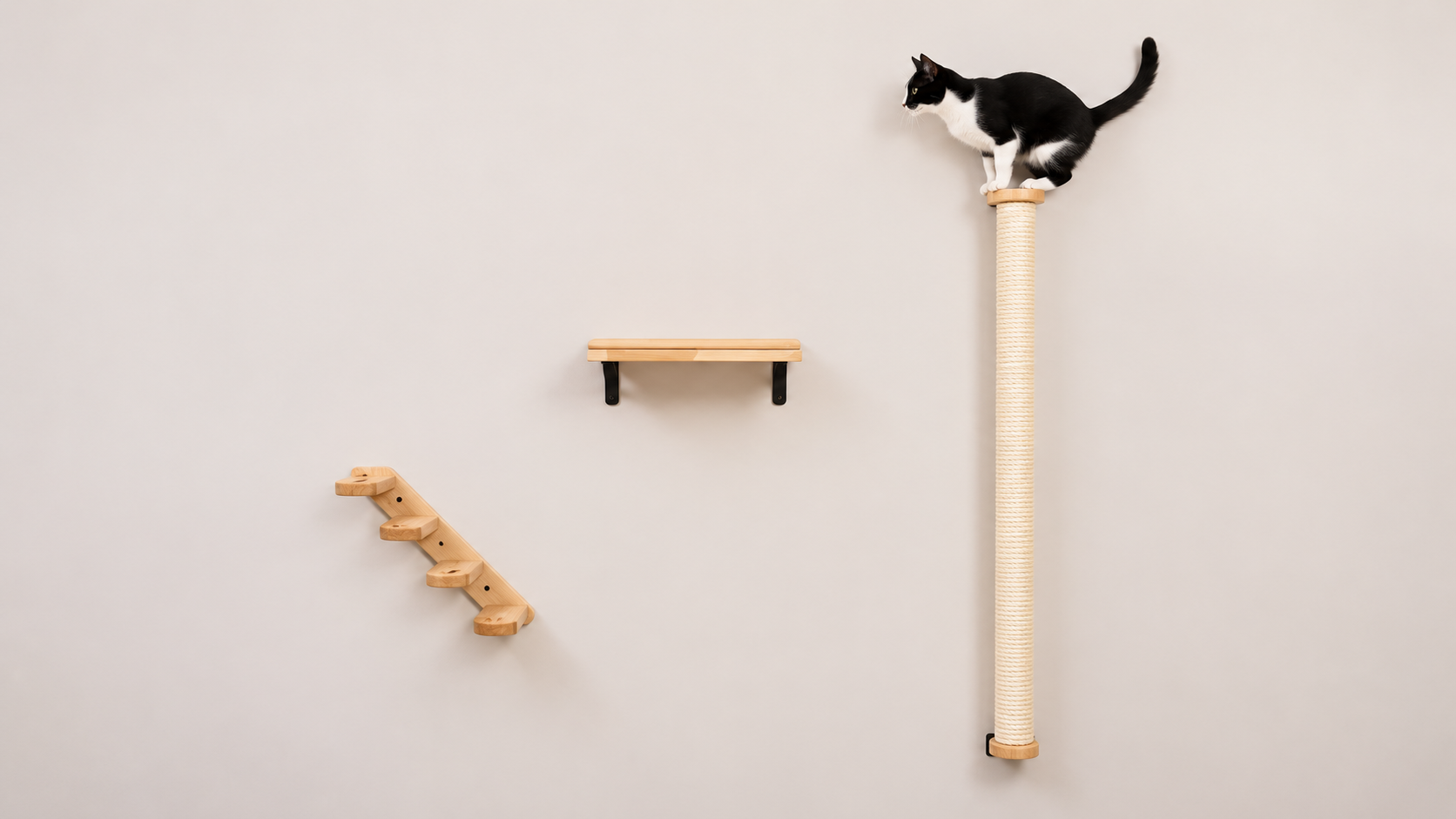
Image: Jeanette
A wall-mounted scratcher can provide a useful vertical surface without adding another object to the floor.
Look for:
- A long enough surface for your cat to stretch fully. Strong sisal, fabric or replaceable scratching material
- Clearly explained installation instructions. Appropriate screws and wall fixings.
A surface that can be replaced when worn. No exposed staples, sharp edges or loose fibres. - Observe how your cat normally scratches. Some cats stretch vertically, while others prefer a flat or angled surface. A wall scratcher will not be useful if it does not match the cat’s preference.
Position it where the cat already tries to scratch and not in a distant corner simply because the panel looks attractive there. It should be low enough for the cat to reach comfortably but tall enough for a full stretch.
The scratcher must not wobble or fall when pulled. Different walls need different fixings. A product described as “easy installation” may still require drilling, screws and a solid wall support.
If you rent your home:
- Ask the landlord before drilling. Do not assume a powerful adhesive will leave the paint undamaged. - Consider a heavy freestanding scratcher if wall installation is not permitted. - Photograph the wall before installation.
- Never encourage a cat to climb on a panel unless the product is specifically designed and safely installed for climbing.
SMALL-SPACE TAKEAWAY
A properly secured vertical scratcher can save valuable floor space. A poorly fixed one can damage the wall or frighten the cat.
SOURCES
Catster, “Best Wall-Mounted Cat Scratchers”: https://www.catster.com/lifestyle/best-wall-mounted-cat-scratchers/
Chewy installation questions for a wall-mounted scratcher: https://www.chewy.com/fukumaru-wall-mounted-60-in-cat-wall/dp/3775638
Sources and further reading
This practical tip is general information, not veterinary advice. For anything specific to your animal, please speak to a qualified vet.