
How Do You Stop a Rabbit Chewing Carpet in a Rental?
Block access to the damaged carpet, protect vulnerable edges and provide suitable chewing and digging opportunities in a spacious, rabbit-proofed area. No deterrent makes carpet safe to eat; if your rabbit may have swallowed fibres, contact a rabbit-experienced vet for advice.
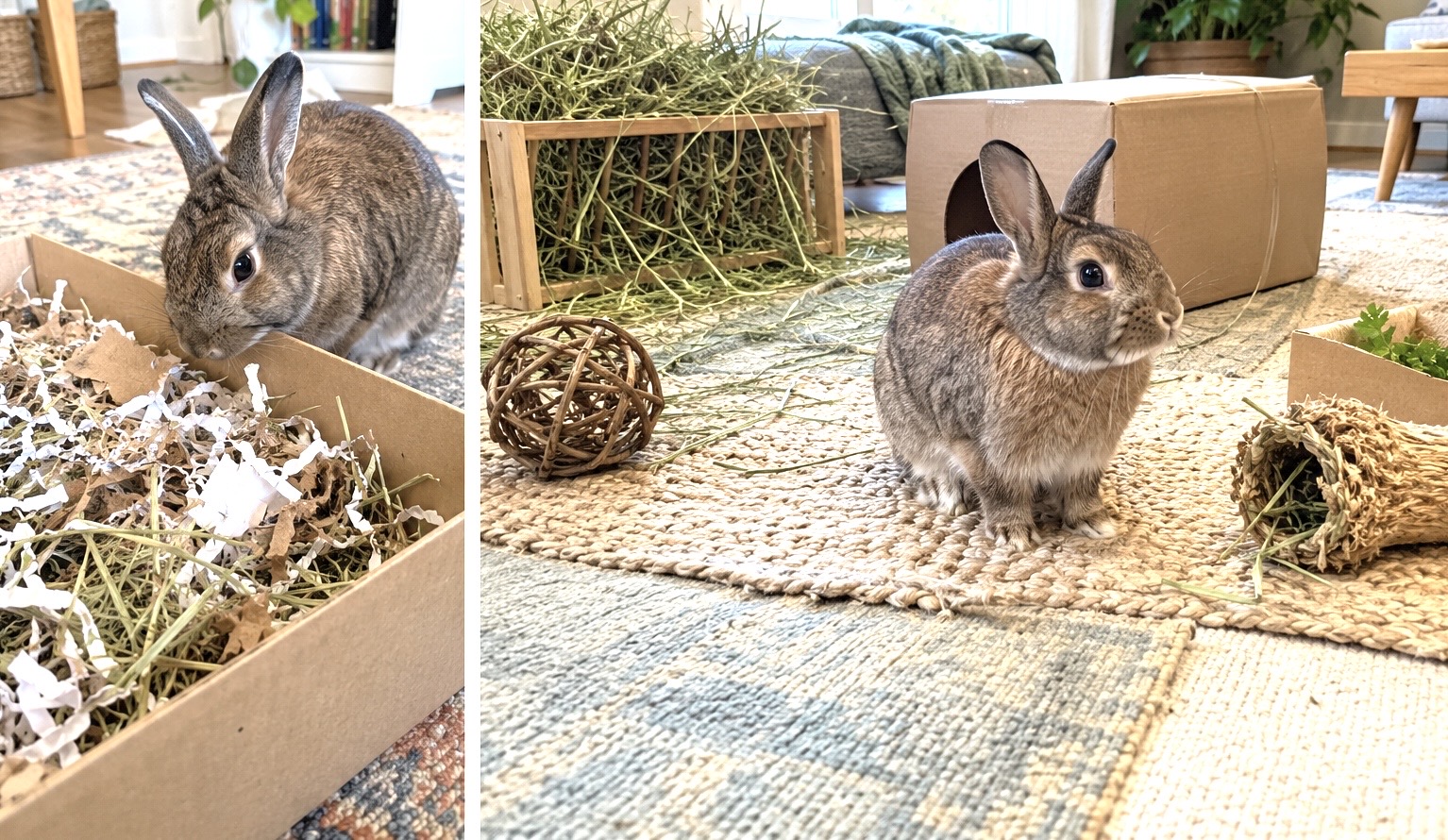
Image: Eva
1. Prevent access to the damaged area.
If your rabbit is pulling up carpet, stop access while you change the setup. Loose fibres and backing are not suitable chewing materials. Photograph the damage and check what protection your landlord permits.
Look at where chewing happens. Carpet corners, doorway joins and edges under furniture can be particularly easy to grab. A stable barrier can keep the rabbit away from a specific edge without shrinking the whole living area.
2. Protect the floor without creating a new hazard.
- Choose a covering that provides grip, stays flat and can be inspected and cleaned. Protect any backing, loose edge or underlay from access. Do not leave adhesive tape, foam or plastic corners where the rabbit can reach them.
- Test any new surface under supervision. If the rabbit starts shredding or swallowing it, remove access and choose another arrangement. A product sold as pet flooring is not necessarily suitable for every rabbit.
3. Offer an acceptable outlet.
- Rabbits need opportunities to investigate, chew and dig. Provide plentiful suitable hay, rabbit-safe enrichment and a digging box with appropriate material. Rotate simple activities to keep the space interesting, and remove anything that becomes unsafe.
- Review space, exercise and companionship as well as toys. A small cage or punishment does not meet the underlying need. RWAF recommends a suitably bonded rabbit companion and a generous, permanently accessible living area.
4. Watch the pattern.
Does chewing increase before meals, when access is blocked or when the rabbits are inactive?
Use this information to improve their routine rather than assuming the rabbit is being naughty. Persistent or changing behaviour can justify help from a rabbit-experienced vet or welfare professional.
5. If fibres may have been swallowed.
Ask a rabbit-experienced vet for advice rather than waiting for visible illness. Eating less, fewer droppings, marked lethargy or signs of pain require urgent veterinary attention.
Sources and further reading:
RWAF - indoor housing: https://rabbitwelfare.co.uk/welfare-need/indoor-rabbit-housing/
RWAF - digging: https://rabbitwelfare.co.uk/welfare-need/digging/
PDSA - reduced appetite in rabbits: https://www.pdsa.org.uk/pet-help-and-advice/pet-health-hub/symptoms/my-rabbit-isn-t-eating-properly
Sources and further reading
This practical tip is general information, not veterinary advice. For anything specific to your animal, please speak to a qualified vet.