
How Do You Set Up a Rabbit Litter Box on Carpet?
Use a roomy, accessible litter tray in the rabbit's chosen toilet area, with suitable rabbit litter and stable waterproof protection underneath. Extend protection beyond the tray, keep chewable edges out of reach and inspect underneath regularly for dampness.
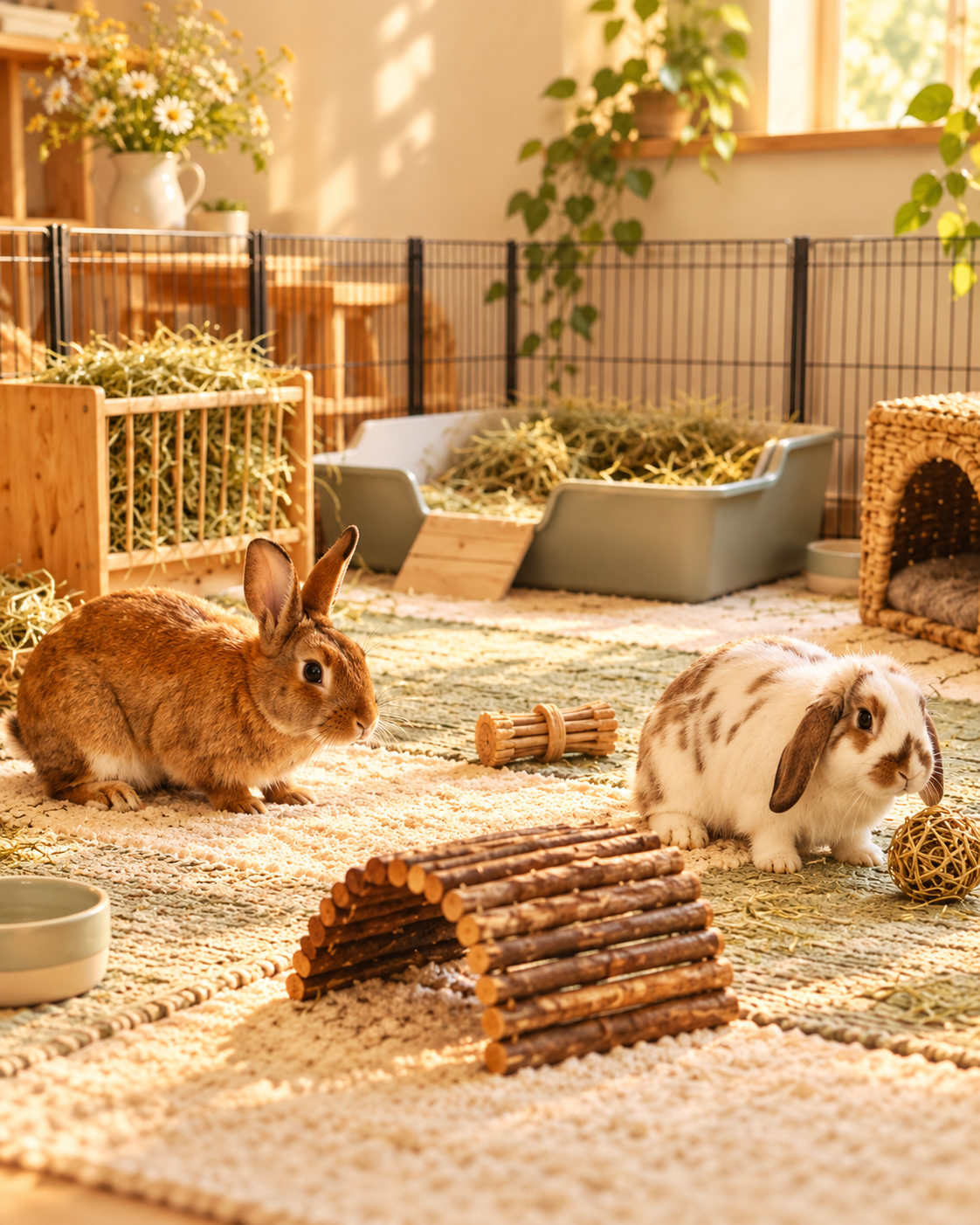
Image: AndyB
*Follow the rabbit's preferred location*
Place a tray where the rabbit already tends to toilet, if the position is suitable. A box tucked into your preferred corner may be ignored if the rabbit consistently chooses somewhere else. The tray should allow comfortable turning and have an entrance the rabbit can manage. Make sure it stays stable when the rabbit gets in and out. Do not force a rabbit into the box as a punishment.
*Protect the surrounding carpet*
Use a stable waterproof base extending beyond the front and sides of the tray. If you add an absorbent washable layer, keep it flat and secure. Inspect underneath: a dry-looking top does not guarantee the carpet below is dry. Do not allow access to disposable pad filling, plastic edges, loose threads or damaged backing. If the rabbit chews the protection, block access and change the setup. This arrangement is a way to contain spills, not a guarantee against every accident.
*Use litter made suitable for rabbits*
Choose an appropriate rabbit litter, such as a suitable paper-based, non-clumping product. Avoid assuming that a cat litter is suitable too. Keep fresh hay available and place it where the rabbit can eat comfortably without relying on soiled hay. Remove dirty litter and replace wet material promptly. Wash the tray regularly with a suitable cleaner, rinse it and let it dry. Keep the rabbit away from cleaning products and residues.
*Deal with carpet accidents promptly*
Blot urine with a clean white cloth or paper towel rather than rubbing it into the pile. Use a pet-compatible enzymatic carpet cleaner according to its instructions, testing a hidden patch first. Keep the rabbit away until the area is dry and appropriately ventilated. If urine repeatedly escapes the same side, check tray size, entrance position and the rabbit's posture. Add a second tray in a chosen toilet spot when appropriate, rather than repeatedly moving the only tray around.
*Know when it is more than training*
A previously reliable rabbit that starts having frequent accidents needs a veterinary assessment. Straining, wet fur, pain or reduced appetite should not be dismissed as bad habits. Contact a vet promptly if the rabbit is unwell.
Sources and further reading:
- PetMD - rabbit litter training: https://www.petmd.com/rabbit/how-litter-train-your-rabbit
- RSPCA - indoor rabbits: https://www.rspca.org.uk/adviceandwelfare/pets/rabbits/indoors
- PDSA - reduced appetite: https://www.pdsa.org.uk/pet-help-and-advice/pet-health-hub/symptoms/my-rabbit-isn-t-eating-properly
Sources and further reading
This practical tip is general information, not veterinary advice. For anything specific to your animal, please speak to a qualified vet.