
Are Self-Cleaning Litter Boxes Worth It?
A self-cleaning litter box can help remove waste after your cat uses it. It does not remove the need to check the box, empty the waste bin, wash the unit, or watch for changes in your cat's toilet habits. Some cats may dislike the noise or enclosed shape.
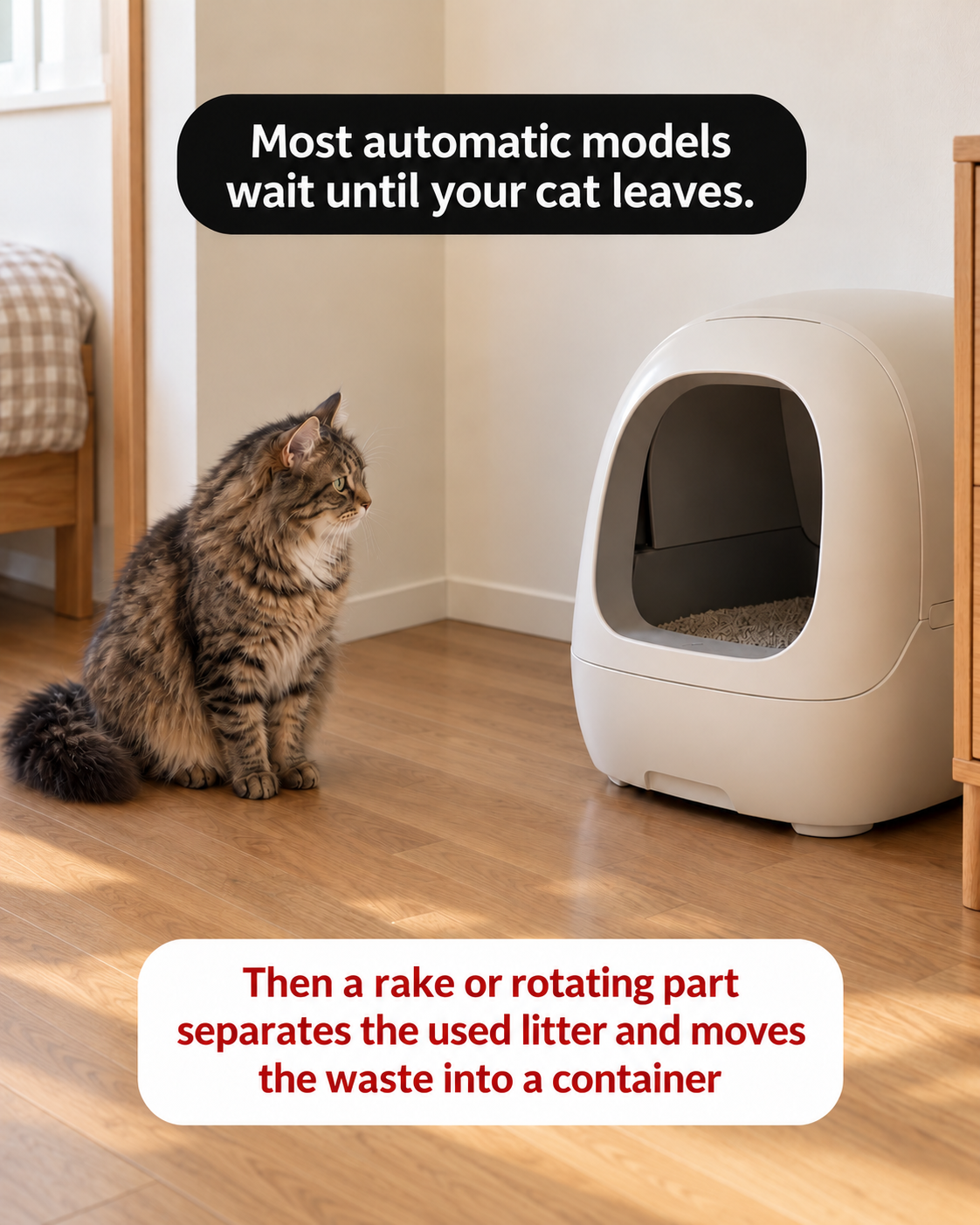
Image: EvaB
What does a self-cleaning litter box actually do? Most automatic boxes wait until the cat leaves, then use a rake or rotating mechanism to separate used litter from clean litter. The waste moves into a container that you empty later. The exact system, compatible litter, sensors and cleaning instructions depend on the model.
That can be useful in a big or small home, where an ordinary litter box may fill up and smell quickly. But the machine is still a litter box. Your cat must feel comfortable entering it, turning around and leaving it. It also needs a quiet, easy-to-reach place, away from food and water.
Does “up to 15 days without cleaning” mean I can ignore it?
No. The Cecotec brand for self cleaning boxes: https://cecotec.es/es/areneros-autolimpiables/pumba-8550-cleankitty-smart
The advertisement says that its self-cleaning model may go up to 15 days before its large waste container needs emptying. That is a product capacity claim under the manufacturer's conditions. It is not a general rule for all automatic boxes, all cats, or every home.
Make a quick check every day: Is the box working? Is the waste container getting full? Is there enough compatible litter? Is your cat using it normally? Empty and thoroughly clean the parts as often as the manufacturer instructs, or sooner if they become dirty or smell. Automatic removal of waste does not make the whole unit self-washing.
The daily check has another purpose: changes in urine or stools can be early clues that your cat needs help. If your cat repeatedly tries to urinate but passes little or no urine, seek urgent veterinary care.
Could an automatic box suit my cat?
It may be worth considering if your cat readily uses a covered box, the entrance is large and low enough, the mechanism is quiet, and you have room for the unit and its required clearance. Check the manufacturer's instructions for your cat's size, age and weight; check its safety sensors and what happens if the cat approaches during a cleaning cycle. Never disable a safety feature.
It may be a poor fit for a cat who is frightened by motor noise, dislikes enclosed boxes, struggles to climb into them, or cannot turn around comfortably. Many older cats need an easy, low entrance. A large machine can also take up more floor space than the product photo suggests, so measure the planned spot before buying. How to introduce one without frightening your cat
- Set it up near a familiar litter box, following the manufacturer's instructions. Keep the old box available.
- Let your cat investigate the new box while it is switched off. Use the litter specified for the machine; if it allows the litter your cat already likes, that may make the change easier.
- When your cat is using it comfortably, switch on the cleaning cycle and watch how the cat reacts. Do not force your cat inside.
- Keep a normal box available during the transition. If your cat avoids the automatic one, slow down or return to the usual box.
For a household with several cats, an automatic unit does not automatically replace every other box. The usual starting point is one litter box per cat plus one extra, in different accessible places. Separate locations matter because one cat may block another cat's route.
The simple answer
A self-cleaning litter box may save you some scooping. It cannot tell you by itself whether your cat is comfortable or healthy. Choose the box for your cat's needs, introduce it slowly, check it daily and keep cleaning it according to the instructions. If your cat suddenly starts toileting outside the box, speak to a vet to rule out a health problem.
Sources for this tip:
- Cecotec — Pumba 8500 CleanKitty Smart product information (manufacturer's product claims, not a veterinary recommendation)
these are the direct links to each exact page:
- Cats Protection: https://www.cats.org.uk/help-and-advice/cat-behaviour/toileting
- Cat Friendly Homes: https://catfriendly.com/everything-you-should-know-about-litter-boxes/
Sources and further reading
This practical tip is general information, not veterinary advice. For anything specific to your animal, please speak to a qualified vet.