
How Can You Cat-Proof a Balcony Without Drilling?
A balcony may be secured without drilling only if a purpose-designed enclosure can be fitted safely to its structure. Netting, temporary poles and adhesive hooks are not automatically secure; keep the balcony closed to your cat if you cannot verify a complete, reliable enclosure.
By Pets in Wonderland editorial teamPublished 4 October 2026Updated 10 October 20262 min read
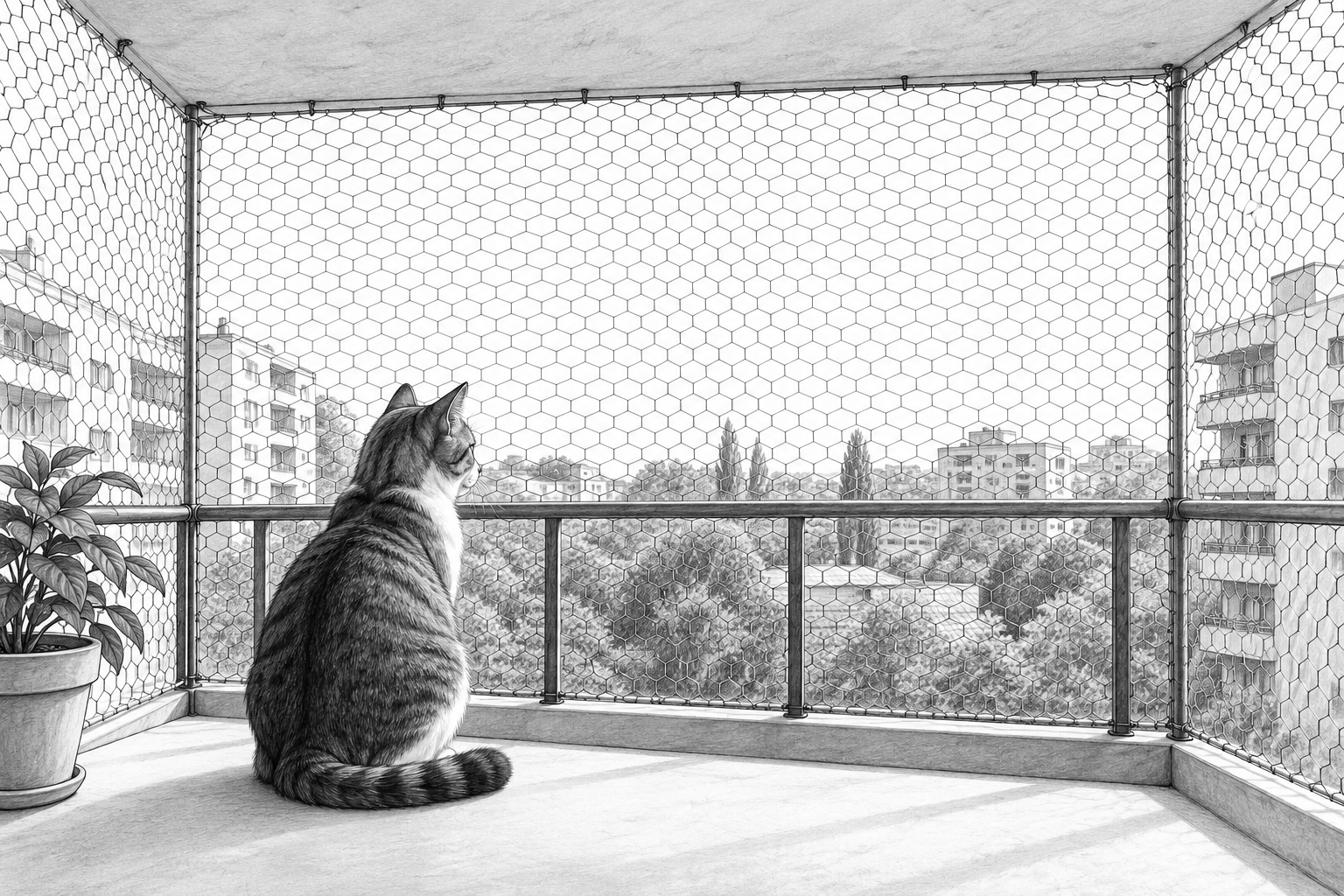
Image: DAryan K
Balconies differ in shape, height, railings and overhead cover.
- A product that fits one building may be unsuitable for another.
- Photograph and measure the full opening, including gaps below the railings and beside neighbouring balconies.
- Check your tenancy and building requirements before fitting anything. Permission to install an enclosure does not confirm that it will safely contain a cat.
1. Look for a complete enclosure.
- A secure system needs to prevent a cat climbing over, slipping underneath or squeezing around its sides. Protecting only the railing leaves the space above it open.
- Ask the supplier whether the system is designed for cats, whether it fits your particular balcony and how its fixings resist movement and weather. Follow the supplied installation instructions. Have a competent installer assess an uncertain structure or fixing method.
- No-drill describes the way a system is attached. It does not certify its strength. Do not substitute adhesive hooks, improvised ties or unsecured poles for the specified fixings.
2. Inspect before access.
- Look for loose mesh, exposed sharp edges, hazards and openings at corners.
- Check that doors and windows can still be used appropriately and that the installation does not obstruct required exits.
- Remove furniture that gives access to an unprotected edge. Remove unsafe plants and provide shade and an easy route back indoors.
- Supervise your cat even with an enclosure in place.
- Inspect the setup regularly and after strong wind or maintenance work. If a fixing loosens or the enclosure is damaged, stop access until it has been repaired and checked.
3. When an enclosure is not possible.
- Keep the balcony inaccessible.
- A secure indoor window-viewing perch can provide interest without balcony access, provided the window itself is safe.
- A harness, supervision or confidence in your cat's balance should not replace a secure barrier against a fall.
Sources and further reading:
Cats Protection - indoor cats and balcony safety: https://www.cats.org.uk/help-and-advice/home-and-environment/indoor-cats