
What Size Enclosure Does a Hamster Really Need?
Aim for an enclosure with at least 100 × 50 cm of continuous floor space for one hamster; bigger is better. It also needs deep bedding for burrowing, a suitably sized solid wheel, and places to hide. House hamsters separately.
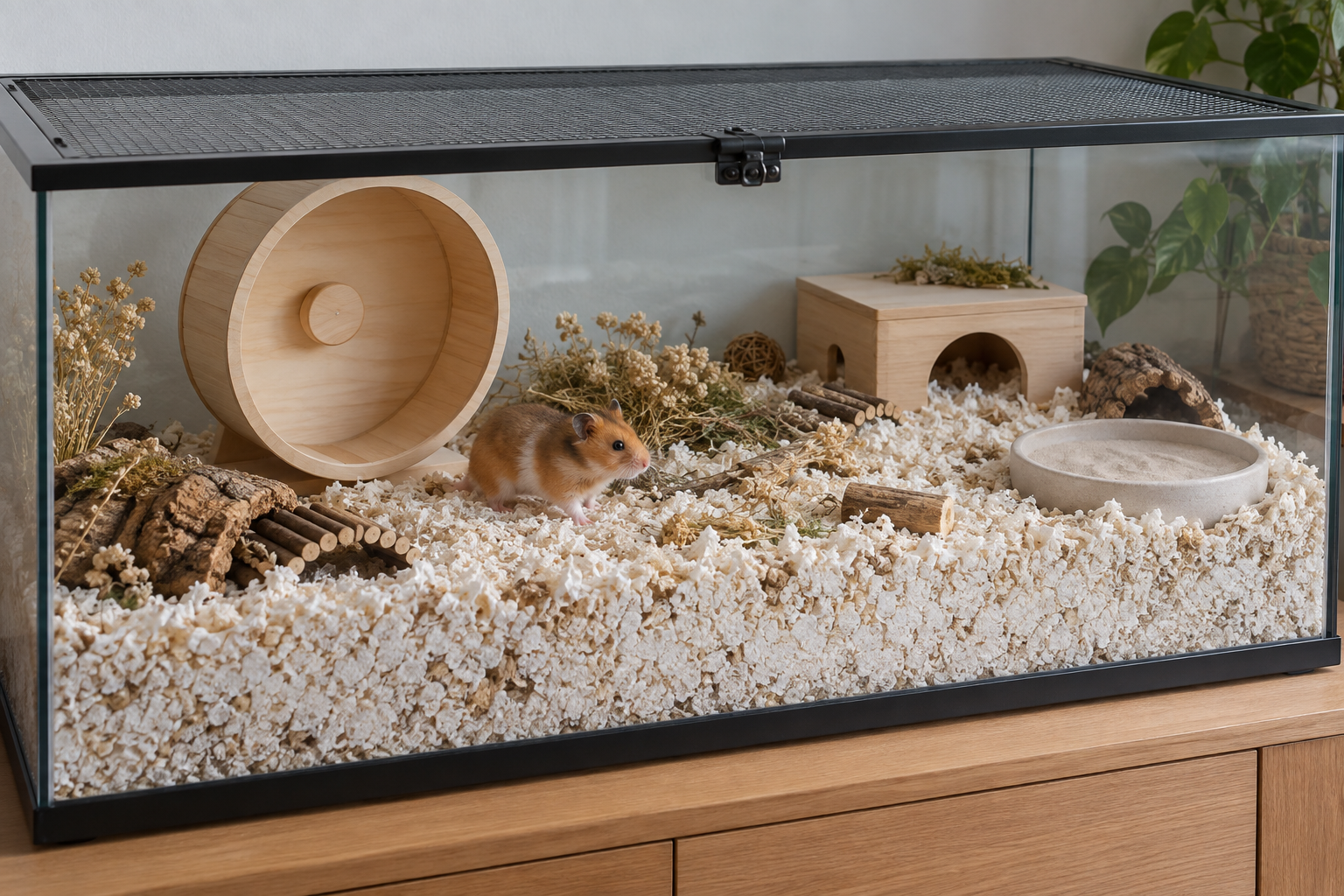
Image: Pets in Wonderland
Key points
- Floor area beats levels: one large open floor is better than several small tiers.
- Bedding deep enough for real burrowing is as important as floor size.
- Housing hamsters separately is the safest straightforward advice for owners. Syrians hamster MUST live alone and some dwarf hamsters can live together but they do not need company and may fight.
- Wire-runged wheels and small wheels can injure a hamster; use a solid wheel sized to the animal.
Floor space
Look for one continuous rectangle rather than a tall cage with tubes. Large glass tanks with mesh lids and converted storage-box enclosures are common solutions in small flats because they give real width. Whatever you use, it must be secure, well ventilated and escape-proof.
Bedding and burrowing
Provide a deep layer of unscented paper-based bedding or dust-free bedding that holds a burrow — often 25 cm can ensure the enclosure. Hamsters are burrowing animals, and shallow bedding is one of the clearest signs of an under-equipped enclosure. Add plain hay and a nest box.
The wheel
A wheel is essential, not optional. It should have a solid running surface and be big enough that the hamster''s back does not curve while running. If the back arches, the wheel is too small.
Enrichment
- Low dust sand bath, plain, and unscented children''s sand for grooming.
- Chews and untreated wooden items for dental wear.
- Scatter-feeding to encourage foraging.
- Tunnels, cork bark and hides.
Species differences
- Syrian — the largest; needs the most floor space and always lives alone.
- Dwarf — smaller but very active; wide floor area still matters.
- Roborovski — tiny and extremely fast; needs a secure enclosure with small gaps and plenty of sand and hiding places.
Placement in a small apartment
Keep the enclosure out of direct sun and away from draughts, radiators, televisions and speakers. Hamsters are nocturnal, so a bedroom placement often disturbs both parties — the living room usually works better.
When to see a vet
Weight loss, wet tail or diarrhoea, laboured breathing, lumps, sore feet or a sudden change in activity all need veterinary attention. Hamsters are small and deteriorate quickly, so do not wait.
Read next
Further proposed reading:
-https://www.rspca.org.uk/adviceandwelfare/pets/rodents/hamsters/environment
Sources and further reading
This practical tip is general information, not veterinary advice. For anything specific to your animal, please speak to a qualified vet.