
Can a Dwarf Hamster Live Alone in a Small Bedroom?
Yes. A dwarf hamster does not need another hamster to be happy, and housing it alone avoids the risk of fighting. It can live in a bedroom if there is space for a large enclosure and its nighttime activity will not disturb you. Handle it gently when it is awake, close to the floor.
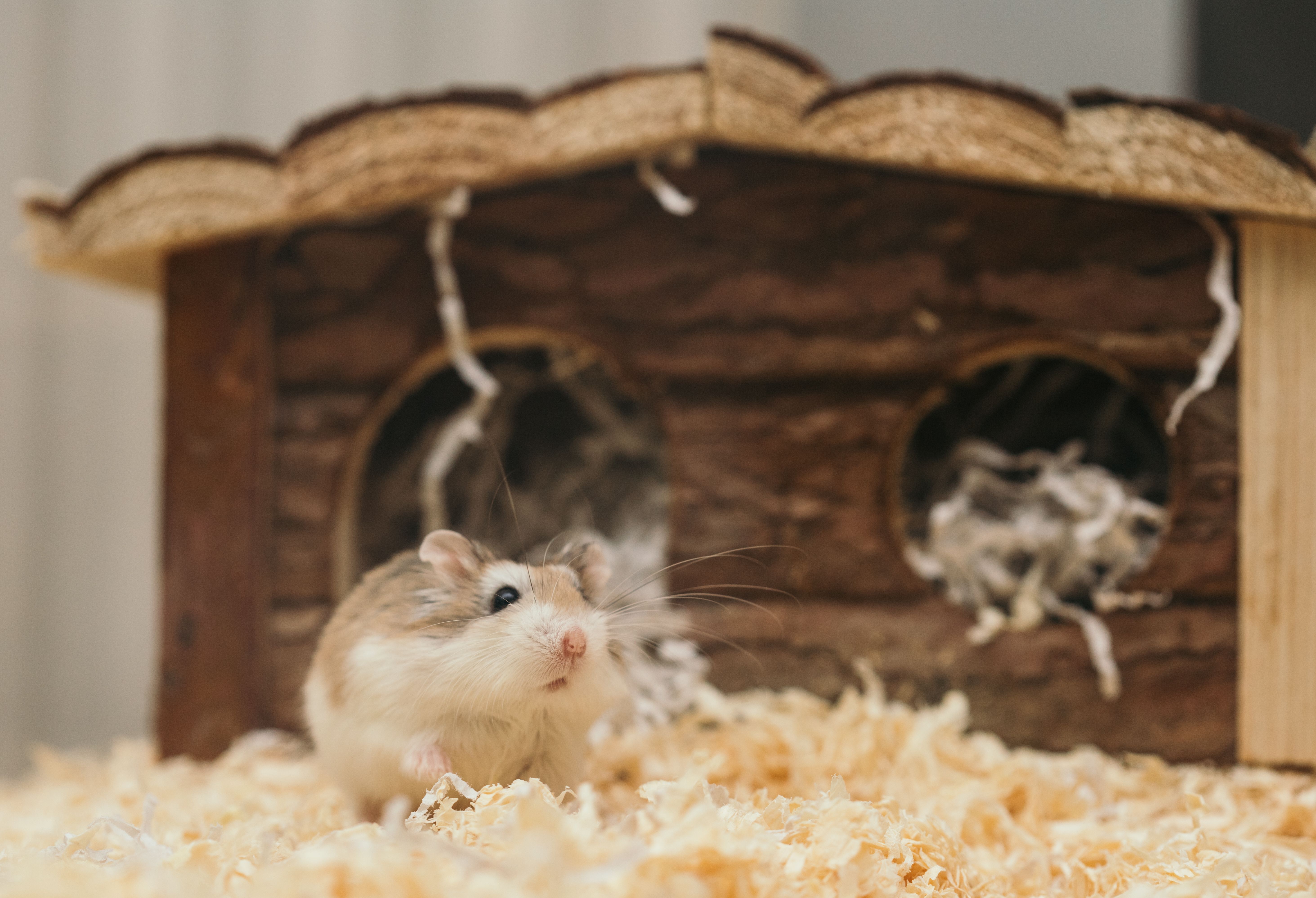
Image: Ellie Burgin
Living alone
Dwarf hamsters do not need a cage mate. Some can live in established groups under particular conditions, but disagreements can lead to serious injuries. If you are planning a home for one dwarf hamster, a separate enclosure is a sound choice.
Handling your hamster
Give a new hamster time to settle. When it is awake and alert, let it investigate your hand at its own pace. Offer a treat, then gently cup it with both hands or let it walk into a small tunnel before moving it. Sit on the floor or handle it just above a stable surface so it cannot fall far. Never wake it simply to pick it up.
In a small bedroom
Check that the room can accommodate an enclosure with at least 100 × 50 cm of floor space, deep bedding, hides and a suitable solid wheel. Keep the enclosure away from direct sun, draughts and heat sources. Your hamster may be active while you sleep.
You may offer supervised time in a secure playpen. Never leave a dwarf hamster loose and unattended in the bedroom: it can escape or reach cables and narrow gaps.
Further proposed reading:
Sources and further reading
- Woodgreen — Caring for hamsters
- RSPCA — Keeping hamsters together
- RSPCA — Hamster behaviour and handling
This practical tip is general information, not veterinary advice. For anything specific to your animal, please speak to a qualified vet.