
How Do You Organise Life with a Dog in a Small Apartment?
Give each essential activity a clear place, then anchor walks, toilet trips, meals, play and rest to a routine you can follow on ordinary days. A quiet bed, one compact supply station and a small rotation of enrichment activities can make a limited floor plan feel calmer and easier to manage.
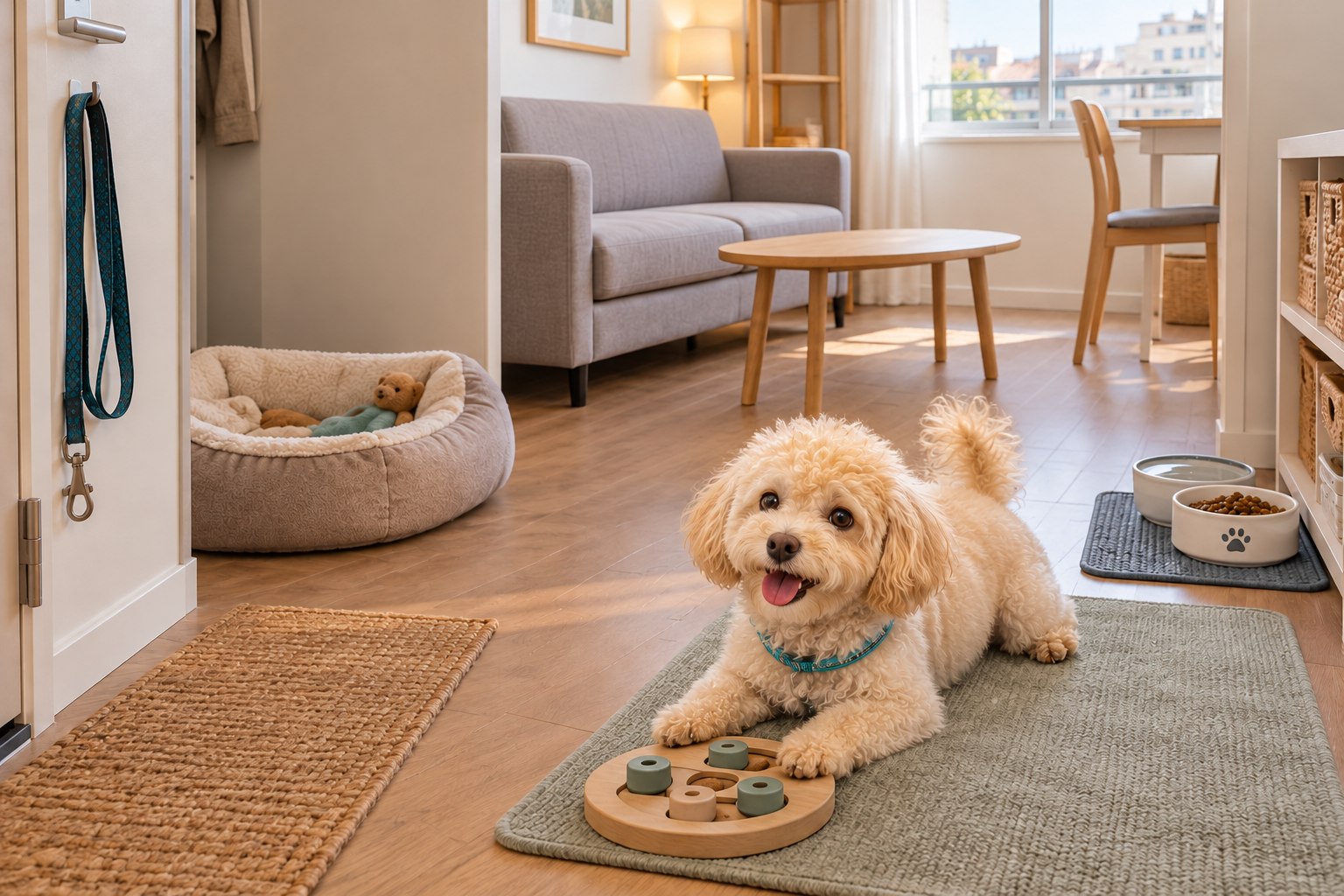
Image: Eva
Key points
- Give resting, feeding and everyday equipment a consistent place.
- Build the routine around the dog in front of you, including their age, health, energy and toilet needs.
- Use outdoor time and compact enrichment rather than expecting the apartment itself to provide all activity.
- Keep the route to the door clear so leaving for a walk does not become a daily scramble.
1. Start with three simple zones
You do not need a separate room for every activity. In a small apartment, three clearly organised spots are often more useful than pet items spread everywhere.
2. A quiet resting place
Choose a warm, dry place away from draughts and heavy foot traffic. The bed or open safe space should let your dog settle without being disturbed. Keep access to drinking water clear, and make sure nearby wires or small chewable objects are out of reach.
3. One feeding station
Keep food and water bowls in a place where they will not be kicked or block a narrow walkway. Store the daily food, scoop and washable mat together so feeding does not involve opening several cupboards.
4. An activity spot
A washable mat can mark the place for short training games, grooming or a food puzzle. Put it away when it is not in use if you need the floor space.
5. Build a routine around fixed points
Start with the parts of the day that rarely move: waking up, work, meals and bedtime. Add the dog's toilet trips, walks, feeding, play and rest around those points. A simple written plan can help everyone in the home follow the same routine.
For example:
- Morning: toilet trip, walk or sniffing time, breakfast, then a calm period.
- Middle of the day: toilet opportunity and a short walk, play or training session suited to your dog.
- Evening: a longer outing if appropriate, dinner, quiet company and a final toilet trip.
This is a framework, not a rule. Puppies, older dogs and dogs with health needs may need a different schedule. Ask your vet for individual advice if you are unsure what is suitable.
Make leaving the apartment easy
Keep the lead, harness, waste bags and a paw towel together near the exit, but beyond the dog's reach. A small hook, narrow basket or door-mounted organiser can hold the essentials without taking over the hallway.
If you use a lift or shared corridor, allow enough time to leave calmly. Plan toilet trips before the dog becomes urgent, especially when getting outside takes several minutes.
Choose enrichment that stores flat
You do not need a large toy collection. Rotate a few safe activities so they stay interesting:
- a food puzzle that suits your dog's size and way of playing;
- a supervised sniffing game using part of the dog's usual food;
- a rolled towel game, if your dog will not tear or swallow the fabric;
- two or three minutes of reward-based training;
- a safe chew recommended for your individual dog.
Put most items away and bring out one at a time. Supervise new activities and remove anything that becomes damaged or could be swallowed.
Use furniture carefully
A bed may fit under an open table or beside a sofa, provided the space is stable, ventilated and easy for the dog to enter and leave. Do not make a resting place under furniture that could fold, tip or trap the dog. Keep balconies, windows, cables, cleaning products and human medicines secure.
Review what is working
Once a week, ask three questions:
- Is the resting place genuinely quiet?
- Does the daily routine include suitable outdoor activity, toilet access and rest?
- Which toys or supplies were actually used?
Move unused equipment out of the main room and adjust the schedule when your working pattern changes. If your dog struggles to settle, becomes destructive, barks persistently or finds being left alone difficult, speak to your vet or a qualified behaviour professional rather than simply adding more exercise or equipment.
Further proposed reading:
Sources and further reading
- Dogs Trust — Keeping a dog in a flat
- Dogs Trust — How to get your dog into a routine
- Dogs Trust — Creating a safe space for your dog
- Dogs Trust — Enrichment activities for dogs
This practical tip is general information, not veterinary advice. For anything specific to your animal, please speak to a qualified vet.