
Are Hands-Free Dog Leads Practical for City Walks?
Leaving a block of flats with a dog can require several hands: one for the lead, one for the door, and another for bags, keys or an umbrella. A hands-free lead worn across the body may make this routine easier—but it is not the right choice for every dog.
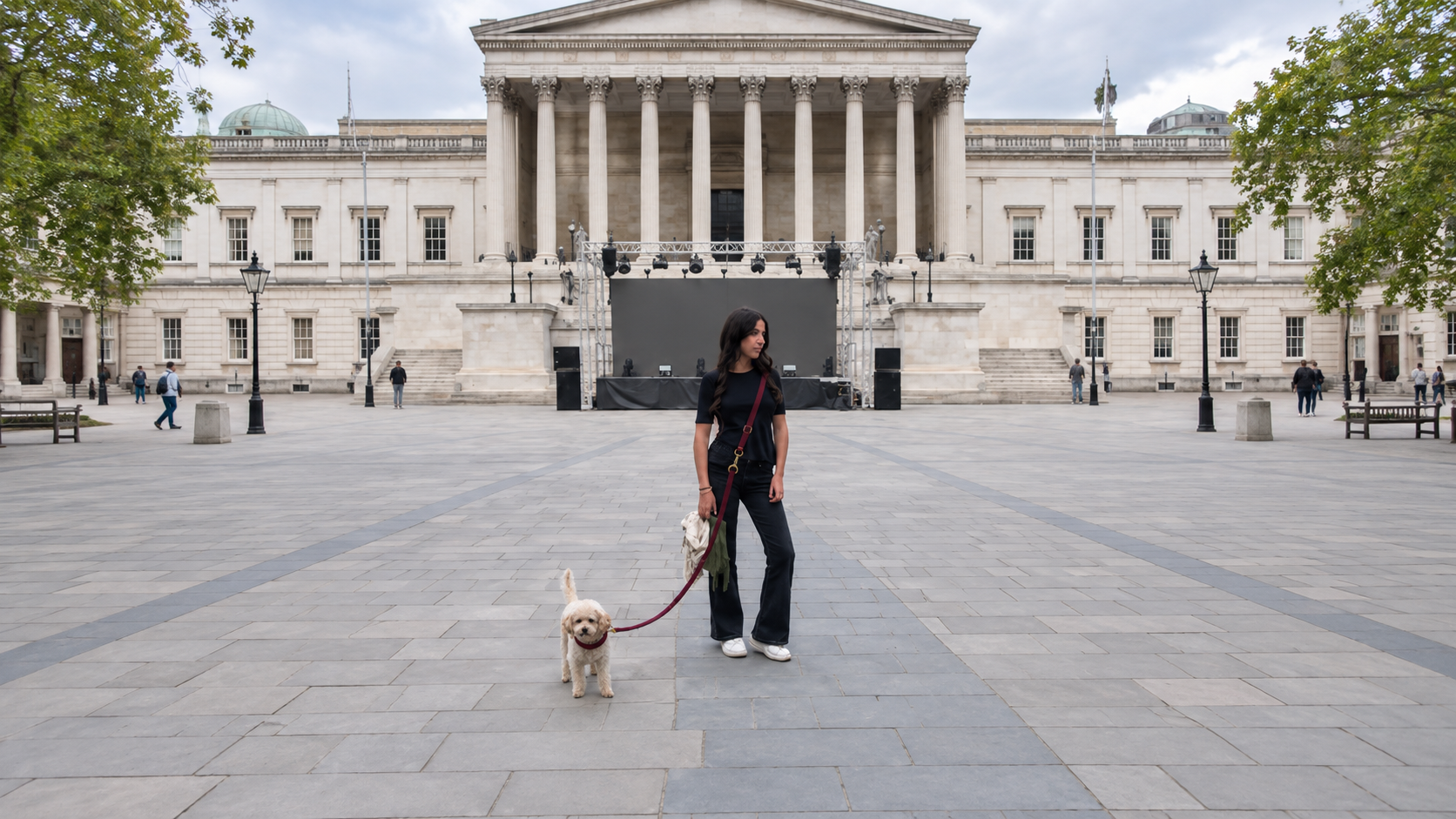
Image: Cassandra M
A hands-free dog lead is normally worn around the waist or across the body. It allows you to open doors, carry shopping or pick up waste without putting the lead down.
For city living, look for:
- Strong clips at both ends.
- An adjustable length.
- A comfortable, wide section across your body.
- Reflective details for evening walks.
- A short handle close to the dog for busy crossings.
- A quick and simple way to release or shorten the lead.
- A cross-body design may feel more secure than a thin lead wrapped around the wrist. However, the dog is physically connected to your body. A large dog that suddenly lunges or pulls could cause you to lose your balance.
A hands-free lead may not be suitable if:
- Your dog pulls strongly.
- Your dog reacts suddenly to bicycles, animals or traffic.
- The dog is much stronger than you.
- You have balance or mobility difficulties.
- You are walking on crowded pavements where close control is necessary.
- For many dogs, attaching the lead to a correctly fitted harness can provide better control than attaching it only to the neck. The appropriate arrangement depends on the dog and its normal walking equipment.
- Practise first in a quiet area. Learn how to shorten the lead quickly before trying it beside roads, bicycles or crowds.
SMALL-SPACE TAKEAWAY
One adjustable cross-body lead can perform several jobs and takes very little room to store. It should make walking simpler without reducing control.
SOURCE
TreeLine Review, “Best Hands-Free Dog Leashes of 2026”: https://www.treelinereview.com/gearreviews/best-hands-free-dog-leashes
Sources and further reading
This practical tip is general information, not veterinary advice. For anything specific to your animal, please speak to a qualified vet.