
Guide
Dog breeds for apartments
Small-space life is less about square metres and more about energy, noise and routine. Here is how the most commonly recommended apartment breeds actually behave indoors — plus real stories from our community.
What actually makes a dog apartment-friendly
Three things decide whether a dog settles in a studio or a one-bedroom flat: how much daily exercise it truly needs, how easily it barks, and how well it copes alone. Body size comes fourth. That is why retired racing greyhounds live happily in flats while a beagle half their weight can make a building miserable.
The table below is a planning tool, not a promise: individual dogs vary far more than breed averages, and a well-exercised, well-trained dog of an "unsuitable" breed can do better than a bored dog of a "suitable" one.
12 breeds that tend to do well in small spaces
| Breed | Typical weight | Energy indoors | Noise | Daily exercise | Good to know |
|---|---|---|---|---|---|
| Cavalier King Charles Spaniel | 6–8 kg | Low–moderate | Quiet | 45–60 min | Very people-oriented and adaptable, but dislikes long hours alone. |
| French Bulldog | 9–13 kg | Low | Quiet, but snores | 30–45 min | Little space and little exercise needed; sensitive to heat, so avoid warm flats without cooling. |
| Greyhound (retired racer) | 25–35 kg | Low | Very quiet | 2 × 30 min walks | Large but famously calm indoors — sleeps most of the day if given a sofa and daily walks. |
| Whippet | 10–16 kg | Moderate | Very quiet | 45–60 min with sprints | Needs short bursts of hard running, then settles completely indoors. |
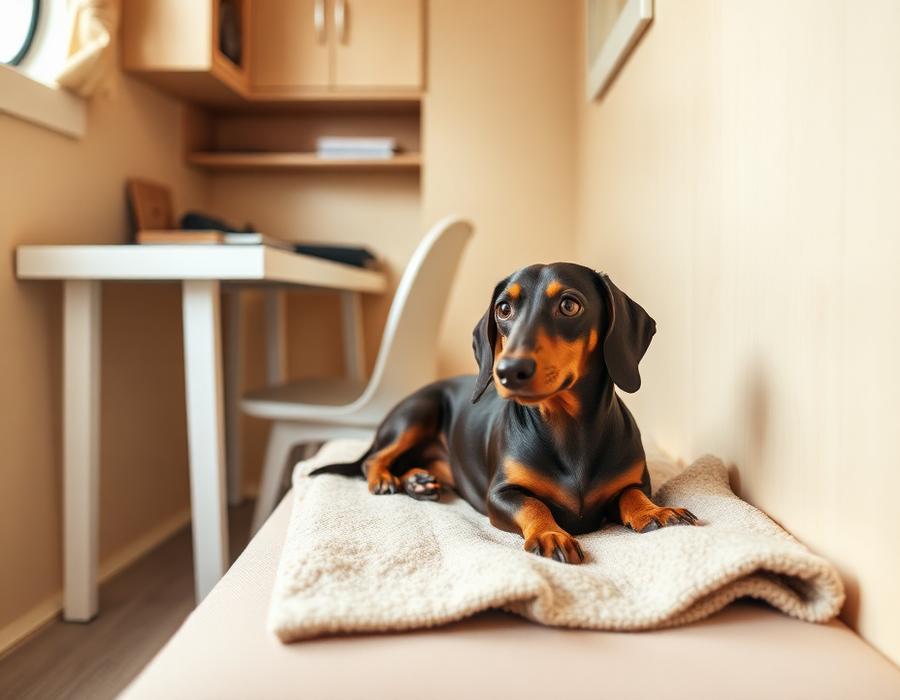
| Dachshund | 4–9 kg | Moderate | Vocal — alert barker | 45 min | Compact and hardy; watch stairs for their back and expect doorbell barking in flats. |
| Bichon Frisé | 5–8 kg | Moderate | Moderate | 45 min | Low-shedding coat suits shared buildings, but needs regular grooming. |
| Shih Tzu | 4–7 kg | Low | Quiet | 30 min | Content with indoor play; brachycephalic, so keep walks cool and gentle. |
| Miniature Poodle | 5–8 kg | Moderate–high | Moderate | 60 min plus training | Small body, big brain — thrives in flats if you give it daily mental work. |
| Boston Terrier | 6–11 kg | Moderate | Quiet | 45 min | Sturdy, playful and famously easy in small rooms. |
| Italian Greyhound | 3–5 kg | Low–moderate | Quiet | 30–45 min | Tiny, warmth-seeking and quiet; needs a coat in cold climates. |
| Basenji | 9–12 kg | Moderate–high | Does not bark (yodels) | 60 min | A good pick where barking causes complaints, but independent and escape-prone. |
| Pug | 6–8 kg | Low | Quiet, noisy breathing | 30 min | Happy in one room; needs weight control and cool air. |
Weights and exercise ranges are breed-standard guidance from national kennel clubs and vary by individual dog. Ask your vet or a rescue about the specific dog in front of you.
Breeds that usually struggle
- Siberian Husky and Malamute — high stamina and very vocal.
- Border Collie and Australian Shepherd — need a job, not a living room.
- Beagle — friendly but a persistent howler in shared walls.
- Jack Russell Terrier — small body, enormous drive.
- Great Pyrenees and other guardian breeds — bred to bark at everything.
Not impossible — but they need a genuinely active household, not just a bigger sofa.
Before you choose: a checklist
- Noise carries more than size does: a quiet 30 kg greyhound bothers neighbours less than a 5 kg alert barker.
- Count your daily minutes honestly, not your best week. A dog that needs 90 minutes will not learn to need 20.
- Lift matters. Stairs twice a day are fine for you, less so for a long-backed or brachycephalic dog.
- Look for one calm resting spot away from the door — most small-space problems are about arousal, not floor area.
- Check the lease and building rules for weight limits and breed restrictions before you fall in love.
- Plan for alone time: separation distress is the single most common reason apartment placements fail.
How it works in real small homes
All dog stories →Stories shared by people who live with dogs in studios, flats and tiny homes.
Questions people ask about dogs in small spaces
Help us grow this guide
Living with a breed that is not listed here? Tell us how it works in your space — your experience becomes part of this guide for the next person deciding.