
Guide
Cats in Small Apartments: Space, Enrichment and Everyday Care
Litter trays, scratching, play, vertical space, safety and life with more than one cat — written for studios, one-bedroom flats and shared homes.
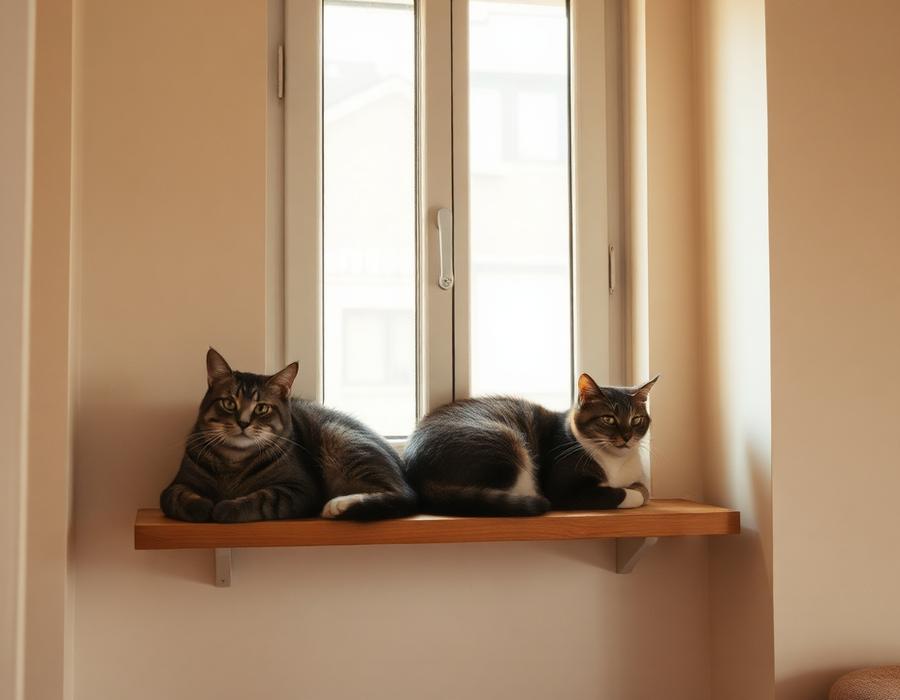
Can Cats Be Happy in Small Apartments?
Yes — floor area matters far less to a cat than what the space contains. Cats care about safe resting places, a predictable routine, somewhere to watch the world from, and things to hunt, climb and scratch. A well-arranged studio with height, hiding places and daily play can suit a cat better than a large but empty house.
What genuinely limits a small home is planning: one litter tray tucked in the only bathroom, no scratching post, or no window view. Each of those is fixable with furniture and habits rather than more square metres.
Creating Comfortable Resting and Hiding Places
Cats sleep in long stretches and want a choice of beds: one warm and enclosed, one high up, one near you. In a small flat, use what already exists — the top of a wardrobe, a covered bed under a desk, a shelf cleared beside a window.
Keep at least one retreat where the cat cannot be reached or picked up. This matters most in shared homes and with children or visitors, because an undisturbed hiding place is what keeps a cat relaxed in a busy room.
Using Vertical Space Safely
Height is the cheapest extra space you have. Shelves, a tall cat tree in a corner, or a route from sofa to sideboard to shelf lets a small room work in three dimensions.
Safety comes first: anchor tall furniture to the wall, make sure every level has a way down that is not a jump, keep landing surfaces non-slip, and never place a climbing route past a tilting window or a hob. Balconies need full mesh, not a rail.
Litter Trays and Odour in a Small Home
The usual guidance is one tray per cat plus one spare, placed apart from each other, away from food and away from noisy appliances. In a studio that often means one tray in the bathroom and a second discreet tray elsewhere rather than two side by side.
Odour in a small space is a scooping problem more than a product problem: remove waste at least twice a day, change litter fully on a regular schedule, use an unscented clumping litter most cats accept, and keep an open or well-ventilated tray if your cat avoids covered ones. A sudden change in toileting is a reason to see a vet, not to buy a stronger deodoriser.
Scratching, Play and Mental Stimulation
Scratching is not optional behaviour, so give it a target near the places your cat already scratches: a tall sturdy vertical post by the sofa and a horizontal card scratcher near a sleeping spot.
Two short wand-toy sessions a day — a few minutes of chase ending in a catch and then food — cover most of what an indoor cat needs. Rotate toys, feed part of the daily ration from a puzzle feeder or scattered around the room, and let the cat watch outside from a safe window perch.
Living With Two Cats in a Small Apartment
Two cats can share a small flat well when they have duplicated resources: separate food and water stations, separate trays, and enough beds and high perches that neither has to queue or pass the other in a corridor.
Introduce new cats slowly through a closed door and scent swapping before any face-to-face meeting, and watch for quiet signs of tension — blocked doorways, one cat always on the floor, or litter-tray avoidance — rather than only for fighting.
Safety and Everyday Wellbeing
In a compact home, hazards sit close together: tilt-and-turn windows, cords and blind pulls, hot rings, washing machines left open, houseplants such as lilies that are toxic to cats, and small objects or hair ties on the floor.
Keep the routine steady — regular feeding, litter care, play, and yearly vet checks with parasite prevention. Weigh your cat now and then: indoor cats gain weight quietly, and in a small space extra food is easier to notice than extra inactivity.
Real Experiences From the Community
All cat stories and questions →Stories and questions shared by people living with cats in studios, apartments and shared homes.
Add your own experience
Living with a cat in a small home? Tell us what worked — your setup becomes part of this guide for the next person.